
How Basalt Fiber Is Made
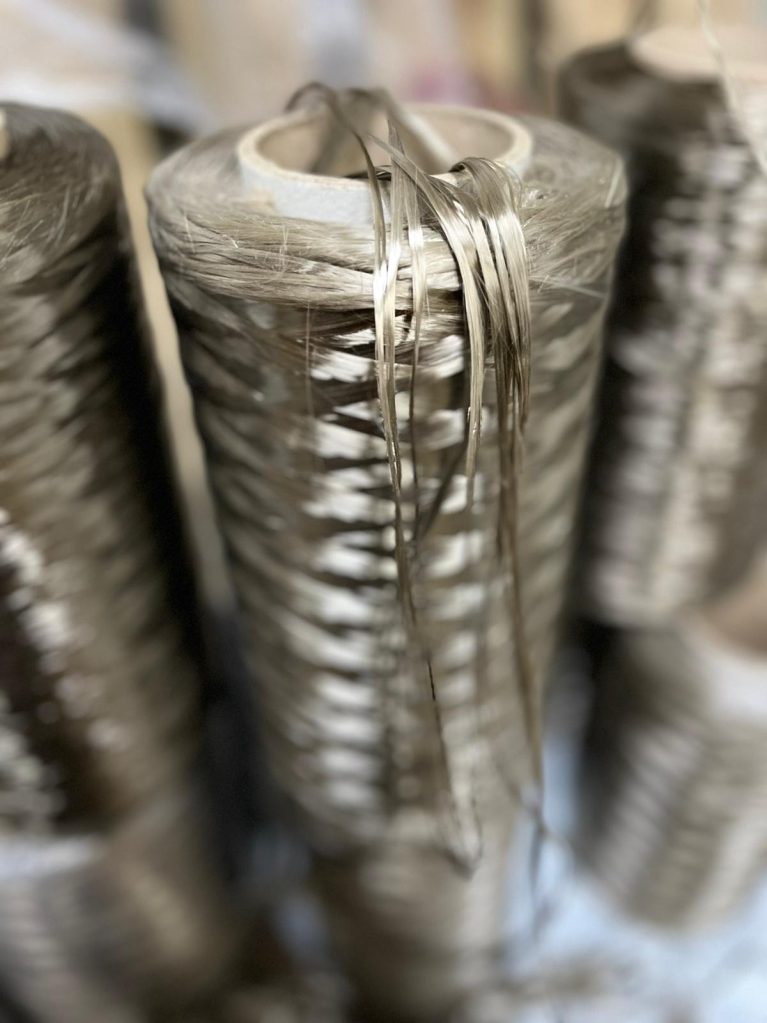
Discover how volcanic rock is transformed into high-performance basalt fibre, exploring the science behind its strength, durability and use in advanced engineering. The article also reveals how MAARCORA applies this remarkable material to create sculptural furniture that combines technical innovation with craftsmanship.
How Basalt Fiber Is Made:
From Volcanic Rock to Advanced Engineering and Sculptural Design
An exploration of the science, strength and industrial applications of basalt fibre — and how MAARCORA brings this remarkable material into contemporary design.
Stone, Elevated
Some of the most advanced materials in modern engineering begin with remarkably simple natural resources.
Basalt fibre is one of them.
Originating from volcanic rock formed through the cooling of lava, basalt fibre transforms an ancient geological material into a high-performance reinforcement used in construction, transportation, marine engineering, industrial protection and advanced composite manufacturing.
Through a carefully controlled process involving extreme temperatures and precision fibre drawing, solid volcanic rock becomes continuous filaments with impressive mechanical properties.
What makes this transformation particularly interesting is the combination of natural mineral composition and modern engineering. Basalt fibre brings together strength, stiffness, thermal stability and resistance to various environmental conditions, making it a versatile material for demanding applications.
At MAARCORA, this same material technology contributes to a different expression: sculptural furniture that combines technical knowledge, distinctive form and individual craftsmanship.
What Is Basalt Fibre?
Basalt is a dark volcanic rock formed when molten lava cools and solidifies.
It is found throughout the world and contains a complex mixture of minerals and oxides. Its principal chemical components typically include:
- Silicon dioxide (SiO₂): An important constituent of the silicate network that contributes to the structure of the resulting fibre.
- Aluminium oxide (Al₂O₃): Influences the properties and stability of the molten material and resulting glass.
- Iron oxides: Contribute to basalt’s characteristic composition and influence its thermal and chemical behaviour.
- Calcium oxide (CaO) and magnesium oxide (MgO): Affect melting behaviour, viscosity and the properties of the resulting fibre.
The exact composition varies according to the geological source of the rock.
This variation matters because not every basalt deposit is equally suitable for continuous fibre manufacturing. Manufacturers must select raw materials with appropriate chemical compositions and control the production process carefully to achieve consistent fibre quality.
Unlike conventional glass fibre, which is generally manufactured from a formulated mixture of mineral ingredients, continuous basalt fibre can be produced using selected basalt rock as the principal raw material.
However, the manufacturing process is still industrial, energy-intensive and technically demanding.
How Is Basalt Fibre Made?
The transformation from volcanic stone into continuous basalt fibre involves several stages.
1. Selecting and Preparing the Rock
Production begins with the selection of basalt deposits suitable for fibre manufacturing.
The rock is crushed into smaller pieces, cleaned and prepared for controlled melting.
Its chemical composition must be evaluated because variations in mineral content influence melting temperature, viscosity, crystallisation behaviour and the mechanical properties of the resulting fibres.
2. Melting at Extreme Temperatures
The prepared basalt is heated in an industrial furnace, generally at temperatures around 1,400–1,500°C, depending on the material composition and production process.
At these temperatures, the solid rock becomes a homogeneous molten material.
Maintaining the correct temperature and viscosity is essential. If the melt is too viscous or begins to crystallise, the fibre-drawing process becomes unstable.
3. Drawing Continuous Filaments
The molten basalt passes through precision openings in a specialised component known as a bushing.
As the material flows through these openings, it is drawn into extremely fine continuous filaments.
Individual filament diameters commonly fall within the micrometre range, often approximately 6–21 micrometres, depending on the intended product and manufacturing method.
For perspective, one micrometre is one-thousandth of a millimetre.
This transformation produces thin, flexible mineral filaments from a material that originally existed as solid stone.
4. Cooling and Surface Treatment
The fibres cool rapidly as they are drawn.
Manufacturers commonly apply a specialised surface treatment, known as sizing, to improve fibre handling, reduce damage during processing and promote compatibility with the resin systems used in composite manufacturing.
Although basalt fibre can be produced without adding a complex mixture of ingredients to the original rock, these subsequent surface treatments are an important part of industrial fibre production.
5. Creating Reinforcement Materials
The continuous filaments are gathered into strands and processed into different forms, including rovings, woven fabrics, multiaxial reinforcements and chopped fibres.
These materials can then be incorporated into polymer resins, concrete and other engineered material systems.
The result is a versatile reinforcement suitable for many different manufacturing processes.
Why Is Basalt Fibre So Strong?
The mechanical performance of basalt fibre comes from its inorganic silicate structure and the controlled process used to form fine, continuous filaments.
Unlike a large piece of rock, which contains natural imperfections and may fracture along existing weaknesses, a carefully manufactured fibre has a much smaller cross-section and can exhibit high tensile strength.
Tensile strength describes how much pulling stress a material can withstand before failure.
Published engineering literature reports tensile strengths for continuous basalt fibres commonly in the region of 2.4–4.8 gigapascals (GPa), although values vary according to raw material, manufacturing quality, fibre diameter and testing method.
A gigapascal represents one billion pascals of stress.
For comparison, many conventional structural steels have tensile strengths measured in hundreds of megapascals. However, this does not mean that basalt fibre is automatically stronger than steel in every application.
Steel is a ductile, relatively isotropic structural material, while basalt fibre is a brittle reinforcement whose performance depends strongly on how it is incorporated into a component.
The comparison is useful for understanding the magnitude of fibre tensile strength, but it cannot replace an engineering assessment of finished structures.
Strength and Stiffness Are Different Properties
Another important characteristic is basalt fibre’s elastic modulus.
The elastic modulus describes how strongly a material resists elastic deformation when a force is applied.
Published values for basalt fibre frequently fall around 80–100 GPa, with some variation across products and studies.
A higher modulus generally indicates greater stiffness.
This combination of tensile strength and stiffness makes basalt fibre attractive as reinforcement in composite structures.
Strength Relative to Weight
Basalt fibre typically has a density of approximately 2.6–2.8 g/cm³, although broader values are reported.
This is considerably lower than the density of steel, approximately 7.85 g/cm³.
When basalt fibres are incorporated into a suitable polymer matrix, the resulting composite can offer useful structural performance at a comparatively low weight.
The final weight advantage depends on the resin, fibre content, component geometry and the material being replaced.
What Happens When Basalt Fibre Becomes a Composite?
Basalt fibre alone is not the finished structural material used in most composite applications.
To manufacture a rigid component, the fibres are combined with a matrix material, commonly a polymer resin.
The fibres and resin perform different functions.
The fibres provide reinforcement and carry substantial tensile loads, particularly along their direction of alignment.
The resin holds the fibres together, transfers loads between them, supports the component’s shape and protects the reinforcement from certain forms of damage.
Together, they create a basalt fibre-reinforced polymer composite, often abbreviated as BFRP.
This combination allows engineers and designers to develop components with specific structural characteristics.
However, performance depends on several factors:
- Fibre orientation and reinforcement architecture.
- Fibre-to-resin ratio.
- Resin chemistry and curing conditions.
- Quality of bonding between the fibre and matrix.
- Component thickness and geometry.
- Manufacturing defects and environmental exposure.
A composite reinforced in one direction may behave very differently when loaded in another.
This is why composite engineering requires an understanding of the complete material system rather than relying solely on the properties of individual fibres.
Basalt Fibre Compared with Glass and Carbon Fibre
Basalt fibre is often discussed alongside glass fibre and carbon fibre because all three are used as reinforcements in advanced composites.
Each material has distinct advantages.
Glass fibre is widely available, relatively economical and used extensively across construction, marine manufacturing and industrial products.
Carbon fibre offers particularly high stiffness and low density, making it valuable in applications where exceptional weight efficiency and rigidity justify its higher cost.
Basalt fibre occupies an interesting position between these materials. It offers useful tensile strength, stiffness, thermal stability and chemical resistance, with a mineral-based production route and different economic characteristics.
Basalt fibre is not universally superior to glass or carbon fibre.
Its suitability depends on the performance requirements, environmental conditions, manufacturing method and cost of the intended application.
Resistance to Heat and Temperature Changes
One of basalt fibre’s notable characteristics is its thermal stability.
Because basalt fibre is inorganic and mineral-based, it does not behave like an ordinary organic textile when exposed to elevated temperatures.
This makes it attractive for applications involving thermal insulation, heat shielding and protective fabrics.
However, an important distinction must be made between the temperature resistance of basalt fibre and the temperature resistance of a finished composite.
A polymer resin may soften, degrade or lose mechanical properties at temperatures far below those tolerated by the mineral reinforcement.
Similarly, coatings, adhesives and other components may impose additional operating limits.
Therefore, the high-temperature performance of basalt fibre should never be interpreted as the temperature rating of an entire composite structure.
This distinction is especially relevant in product engineering, where all materials within an assembly must be considered together.
Chemical and Corrosion Resistance
Basalt fibre is also valued for its resistance to various chemical and environmental conditions.
Unlike steel, the mineral fibre itself does not undergo electrochemical rusting.
This characteristic makes basalt fibre-reinforced polymer materials attractive for selected environments where conventional metallic reinforcement may be vulnerable to corrosion.
Examples include infrastructure exposed to moisture, salts and certain industrial conditions.
However, basalt fibre is not chemically indestructible.
Prolonged exposure to strong alkaline or acidic environments can affect its properties, while moisture and temperature may influence the bond between the fibres and resin.
Engineers must therefore evaluate the specific chemical environment, exposure duration and composite system before selecting basalt fibre for a particular application.
Where Is Basalt Fibre Used?
Basalt fibre is used commercially in several technical sectors and continues to be investigated for more demanding applications.
Construction and Civil Engineering
Construction is one of the most extensively researched fields for basalt fibre reinforcement.
Basalt fibre-reinforced polymer bars, meshes, fabrics and laminates can be used in concrete reinforcement, structural strengthening and specialised infrastructure components.
BFRP reinforcement is particularly interesting where corrosion resistance is important, including certain marine structures, bridges and infrastructure exposed to de-icing salts.
Basalt fibres are also incorporated into some concrete and asphalt formulations to improve selected mechanical or crack-control properties.
Their effectiveness depends on fibre dosage, dispersion, matrix compatibility and the requirements of the structure.
Automotive and Transportation
Transportation manufacturers investigate and use basalt fibre composites in applications where weight, stiffness, thermal performance and durability are important.
Potential and established applications include composite panels, interior components, protective structures, insulation materials and selected friction products.
Reducing component weight can contribute to more efficient vehicle design, although any claimed environmental benefit must be assessed across the complete manufacturing and operating life cycle.
Marine Engineering
Marine environments place demanding requirements on structural materials.
Saltwater, moisture, repeated loading and environmental exposure can accelerate deterioration in inadequately protected components.
Basalt fibre-reinforced composites are used or investigated for selected marine components, protective structures and reinforcement systems.
Their corrosion-related advantages are of interest, but the durability of the finished product depends on the resin, fibre–matrix interface, manufacturing quality and long-term water exposure.
Aerospace and Advanced Transportation
Basalt fibre has attracted research interest in aerospace and specialised transportation applications.
Its combination of mechanical properties, thermal stability and potential cost advantages makes it a candidate for selected panels, insulation systems and hybrid composite structures.
However, aerospace applications require rigorous qualification, and basalt fibre should not be presented as a universal replacement for established aerospace-grade carbon composites.
Industrial Insulation and Fire Protection
Basalt fibre is manufactured into woven fabrics, mats and other technical textile products.
These can be used in industrial insulation, thermal barriers, protective coverings and selected fire-protection applications.
The mineral fibre’s thermal behaviour is useful in such environments, although finished products must be evaluated against the relevant fire and performance standards.
Energy and Electrical Engineering
Basalt fibre composites are used or investigated in electrical insulation, composite supports, energy infrastructure and renewable energy applications.
Their electrical insulating characteristics can be valuable where conductive metallic components would be unsuitable.
Researchers are also exploring basalt fibre reinforcement in wind energy components and other engineered structures.
The maturity of these applications varies, and material selection remains dependent on specific engineering requirements.
Chemical and Industrial Equipment
Basalt fibre reinforcement can be incorporated into composite pipes, tanks, protective systems and industrial components.
Its resistance to selected chemical environments makes it relevant to applications involving moisture, corrosive substances and demanding operating conditions.
The resin system is especially important in these applications because it often provides the primary chemical barrier.
Architecture, Furniture and Sculptural Design
Beyond traditional industrial applications, basalt fibre-reinforced composites offer possibilities for architecture and contemporary design.
Composite manufacturing allows complex three-dimensional geometries to be developed without relying exclusively on the construction methods associated with timber, metal or stone.
Continuous curves, sculptural volumes and carefully integrated structural forms become possible through the relationship between reinforcement, resin and moulded geometry.
For furniture designers, this creates opportunities to combine expressive shapes with functional requirements.
Yet the finished object’s strength, stability, comfort and durability must still be established through appropriate design and validation.
Is Basalt Fibre a Sustainable Material?
Basalt fibre has attracted attention as a potentially more resource-efficient reinforcement material in certain applications.
Its primary raw material is naturally occurring volcanic rock, and the production process can avoid the complex mineral batching required for conventional glass fibre.
Its durability and potential to replace heavier or corrosion-prone materials may also provide advantages in selected product applications.
However, describing basalt fibre as entirely natural or automatically environmentally friendly would be misleading.
Melting basalt requires substantial energy, and polymer composites generally contain industrially manufactured resins.
Transport, production efficiency, service life, maintenance requirements and end-of-life treatment all affect the environmental footprint.
Recycling fibre-reinforced thermoset composites also remains technically challenging.
A credible sustainability assessment therefore requires life-cycle analysis rather than assumptions based solely on the volcanic origin of the raw material.
The environmental benefits of basalt fibre must be considered in the context of the complete product and its intended use.
How MAARCORA Transforms Basalt Fibre into Sculptural Furniture
At MAARCORA, the value of basalt fibre extends beyond its industrial properties.
The material becomes part of a creative process in which engineering knowledge and sculptural design work together.
Drawing on expertise in advanced composites and protective surface technologies, the MAARCORA atelier creates individually handcrafted furniture and collectible design objects in Latvia.
Basalt fibre composite forms part of the construction of pieces within the CORE and MYTH collections, supporting the development of distinctive sculptural geometries.
In the CORE collection, the material contributes to the creation of outdoor furniture with flowing silhouettes and carefully developed forms.
Within MYTH, it becomes part of monumental sculptural objects such as BUCIFAL, where material construction supports a powerful visual identity.
The manufacturing process involves more than selecting a strong reinforcement.
It requires an understanding of structural geometry, material layering, resin behaviour, surface preparation and protective finishing.
Each stage contributes to the character and function of the completed piece.
The final colour, texture and surface appearance are developed through MAARCORA’s finishing process rather than arising directly from the raw basalt fibre.
This distinction is fundamental to the atelier’s approach: material performance and visual expression are developed together.
Where Material Intelligence Meets Artistic Expression
The transformation of basalt from volcanic rock into a technical reinforcement is remarkable in itself.
Its transformation into sculptural furniture adds another dimension.
A material associated with infrastructure, engineering and industrial protection becomes part of objects created for personal spaces, architectural environments and contemporary design collections.
For MAARCORA, the objective is not simply to demonstrate the strength of basalt fibre.
It is to understand what the material makes possible — and to use that knowledge to create forms with individuality, presence and purpose.
The result is a dialogue between technology and craftsmanship, between the precision of engineering and the freedom of sculptural expression.
From volcanic stone to contemporary design, basalt fibre demonstrates how material knowledge can open new possibilities for the objects we create and the spaces we inhabit.
Scientific References and Further Reading
The scientific explanations in this article are informed by published materials research, including:
- American Chemical Society — Basalt Fibers: Development, Sustainable Sourcing, Processing, Properties, and Scaling-Up Challenges (2026)
- Basalt Fiber Technology: From Raw Materials to Engineering Applications — A Review (2026)
- Research Progress on the Surface Modification of Basalt Fibers and Composites (2025)
- Recent Advances to Engineer Tough Basalt Fiber Reinforced Composites: A Review (2024)
- A Review on the Applications of Basalt Fibers and Their Composites in Infrastructures (2025)